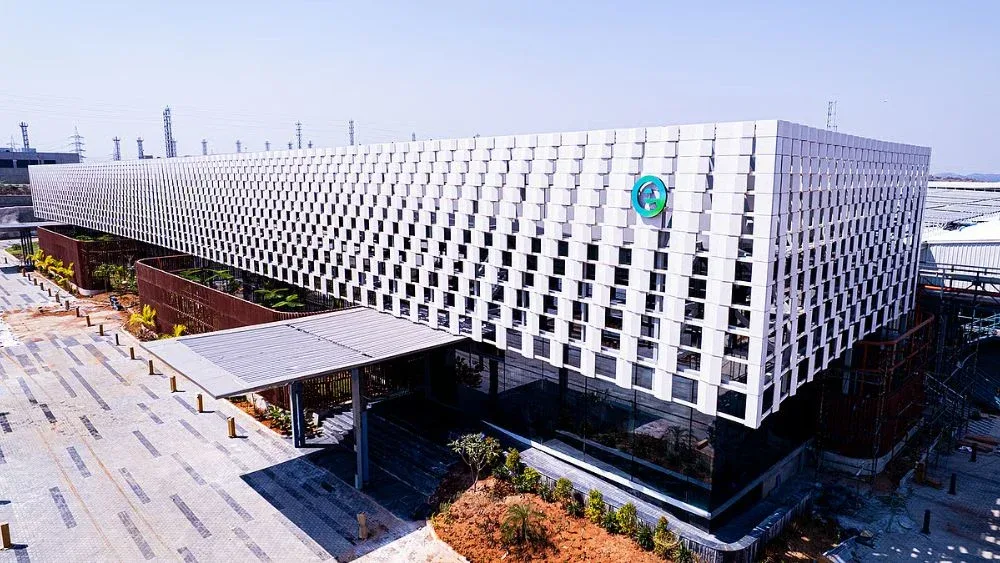
India’s electric vehicle ecosystem is expanding rapidly, and infrastructure development is playing a crucial role in supporting this transition. A new large-scale EV charging equipment manufacturing facility has now been inaugurated in Hyderabad, marking another step forward for the country’s growing electric mobility sector.
The newly established manufacturing complex has been developed with an investment of approximately ₹216 crore and aims to strengthen domestic production of EV charging equipment, lithium-ion battery systems, and advanced power electronics solutions.
Spread across about 18.4 acres, the facility is designed to serve multiple industries including electric mobility, telecommunications, data centres, and other sectors that rely heavily on uninterrupted power supply systems.
But what exactly does this new manufacturing facility mean for India’s EV ecosystem? And how will it support the country’s charging infrastructure growth?
Let’s explore the details.
What Is The New EV Charging Manufacturing Facility?
The newly launched production facility in Hyderabad is an integrated manufacturing unit focused on producing electric vehicle charging equipment and power electronics solutions.
The facility has been designed to strengthen local manufacturing capabilities while addressing the increasing demand for EV charging infrastructure across India.
Key highlights of the manufacturing facility
• Investment of around ₹216 crore
• Spread across 18.4 acres of land
• Built-up production area of approximately 2.8 lakh square feet
• Focus on EV charging equipment and battery systems
• Designed for multiple power and energy applications
With electric vehicles gaining momentum across India, infrastructure projects like this facility are becoming increasingly important.
Where Is The New Facility Located?
The manufacturing complex has been set up in Hyderabad, one of India’s rapidly growing technology and industrial hubs.
Hyderabad has emerged as a strategic location for advanced manufacturing because of:
• Strong industrial ecosystem
• Skilled workforce availability
• Growing EV technology sector
• Connectivity to major markets
The location also allows manufacturers to efficiently supply products to different regions across India and global markets.
How Will The Facility Boost Production Capacity?
One of the primary goals of the new facility is to significantly expand manufacturing output.
In the first phase of operations, the production capacity is expected to increase by approximately 2.5 times compared to previous levels.
This expansion will allow the facility to produce a wide range of products, including:
• EV charging systems
• Lithium-ion battery solutions
• Power electronics equipment
• Energy management systems
Such an increase in production capacity will play a crucial role in supporting India’s growing demand for electric vehicle infrastructure.
What Products Will Be Manufactured Here?
The new plant is designed to manufacture advanced power electronics and EV infrastructure solutions.
These products will support various sectors that require reliable energy systems.
Key products manufactured at the facility
• Electric vehicle charging equipment
• Lithium-ion battery systems
• Power management systems
• Energy storage components
• Infrastructure power solutions
These solutions are essential for industries such as:
• Electric mobility
• Telecom networks
• Data centres
• Critical infrastructure systems
With EV adoption increasing, charging equipment manufacturing will likely become one of the most important segments in India’s clean mobility sector.
What Is The EV Charger Interoperability Testing Centre?
One of the most interesting additions planned at the facility is the creation of an EV charger interoperability testing centre.
But what does that mean?
Electric vehicles from different manufacturers often use varying charging standards. The interoperability centre will test whether charging stations can work smoothly with multiple EV brands and models.
Why interoperability testing matters
• Ensures compatibility with multiple EV manufacturers
• Improves reliability of charging networks
• Supports nationwide EV infrastructure expansion
• Reduces charging issues for vehicle owners
This initiative could significantly improve the charging experience for electric vehicle users across India.
What Advanced Manufacturing Technology Is Used?
To ensure high-quality production, the manufacturing plant integrates modern technologies inspired by Industry 4.0 principles.
Industry 4.0 refers to the next generation of manufacturing systems that rely heavily on automation, digital monitoring, and smart production techniques.
Advanced manufacturing technologies used
• Robotic production lines
• Automated assembly systems
• Digital monitoring tools
• Smart quality control systems
• Data-driven manufacturing processes
These technologies help improve production accuracy, efficiency, and product reliability.
What Special Infrastructure Does The Facility Include?
The plant has been equipped with specialised infrastructure designed to support precision manufacturing and testing.
One of the most notable facilities is the ISO Class 8 cleanroom, which ensures controlled environments for sensitive electronic components.
Key infrastructure inside the plant
• ISO Class 8 cleanroom facility
• Advanced testing laboratories
• Durability testing equipment
• Product performance validation systems
• Environmental simulation testing setups
These facilities help ensure that products perform reliably even under demanding real-world conditions.
How Does The Facility Support Sustainability?
Environmental sustainability has also been integrated into the design of the new manufacturing campus.
Around 40 percent of the facility’s total area has been dedicated to green cover, creating a more environmentally friendly industrial environment.
Sustainability initiatives at the facility
• Large green landscape area
• Rainwater harvesting systems
• Sewage treatment plant
• Energy-efficient building design
• Rooftop solar power installation
A 1 MW rooftop solar power system has also been installed to offset a portion of the plant’s electricity consumption.
These sustainability measures demonstrate how modern industrial facilities are increasingly focusing on eco-friendly operations.
What Standards And Certifications Does The Facility Follow?
Maintaining global quality standards is essential for manufacturing companies, especially in sectors like EV infrastructure and power electronics.
The new plant follows several internationally recognised certifications.
Key certifications include
• IATF 16949 – Automotive manufacturing standard
• ISO 9001:2015 – Quality management system
• ISO 14001:2015 – Environmental management system
• ISO 45001:2018 – Occupational health and safety standard
These certifications ensure that manufacturing processes meet strict quality, safety and environmental requirements.
How Many Jobs Will The Facility Create?
Apart from supporting EV infrastructure growth, the new manufacturing complex will also contribute to employment generation.
During the first phase of operations, the facility is expected to create more than 750 job opportunities.
These jobs will include roles in:
• Engineering
• Manufacturing operations
• Quality testing
• Supply chain management
• Technical support
Such developments are important not only for the EV industry but also for regional economic growth.
What Does This Mean For India’s EV Future?
India’s electric vehicle market is growing rapidly, and the demand for charging infrastructure is expected to rise significantly in the coming years.
Manufacturing facilities like this one help address several critical challenges:
• Increasing domestic production of EV infrastructure
• Reducing dependence on imports
• Supporting faster EV adoption
• Strengthening India’s clean mobility ecosystem
As more EVs enter the market, the need for reliable charging networks and energy solutions will only continue to grow.
Conclusion
The launch of this new EV charging equipment manufacturing facility in Hyderabad marks an important milestone in India’s electric mobility journey.
With an investment of ₹216 crore, a large production capacity, and advanced Industry 4.0 manufacturing systems, the facility is well positioned to support the country’s expanding EV ecosystem.
By producing EV charging systems, lithium-ion battery solutions, and advanced power electronics, the plant will play a crucial role in strengthening India’s charging infrastructure while also generating employment and promoting sustainable industrial development.
As electric vehicles become increasingly common on Indian roads, infrastructure investments like this will help build a stronger and more reliable EV ecosystem for the future.
Frequently Asked Questions (FAQs)
1. What is the new EV manufacturing facility in Hyderabad?
It is a large-scale manufacturing plant focused on producing EV charging equipment and power electronics systems.
2. Where is the new facility located?
The plant is located in Hyderabad, Telangana.
3. How much investment was made in the project?
The manufacturing complex was developed with an investment of approximately ₹216 crore.
4. What products will be manufactured at the facility?
The facility will produce EV chargers, lithium-ion battery systems and power electronics solutions.
5. How large is the manufacturing campus?
The facility is spread across 18.4 acres.
6. How much will production capacity increase?
Production capacity is expected to increase by around 2.5 times in the first phase.
7. What sustainability features does the plant include?
The plant includes solar power, rainwater harvesting, green landscaping and wastewater treatment systems.
8. What is the EV charger interoperability testing centre?
It is a facility designed to ensure EV chargers work with multiple electric vehicle brands.
9. How many jobs will the facility create?
The facility is expected to create over 750 jobs.
10. Why is this facility important for EV infrastructure?
It helps strengthen domestic manufacturing and supports the expansion of EV charging networks.
By BestGaddi