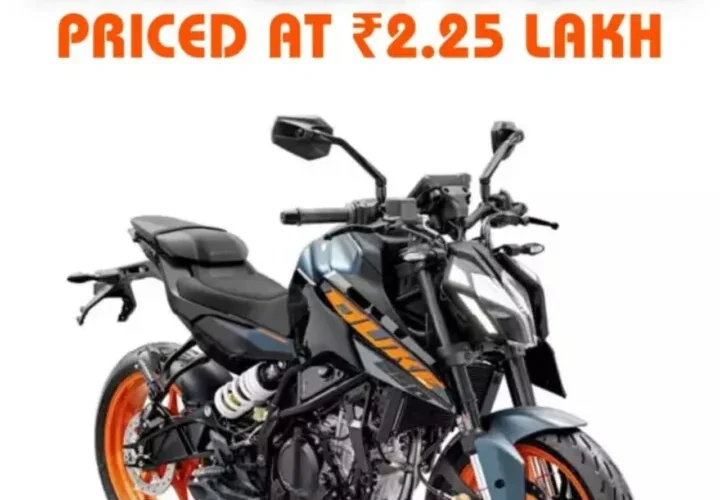
Explore Duke 250 all model details from BS4 to 2024 Gen-2—features, price, mileage, performance, and comparisons with Duke 200 & 390 in one full guide.
Table of Contents
Introduction to the KTM Duke 250
The KTM Duke 250 sits smack in the middle of KTM’s streetfighter lineup in India and globally. It’s the perfect middleweight—bigger than the 200, less aggressive than the 390, but no less thrilling. Designed to appeal to both new riders and veterans alike, the Duke 250 offers a blend of premium build, edgy design, and engaging performance.
Evolution of the Duke 250 Series
Let’s hit rewind for a second and walk through how the Duke 250 has evolved over the years.
First Generation Overview
Back in 2017, KTM launched the Duke 250 in India, borrowing bits and pieces from both its siblings. It had the aggressive styling of the Duke 390 (sans the TFT display) and a detuned single-cylinder engine delivering 30 PS. It immediately struck a chord with enthusiasts.
Second Generation Upgrades
In 2020, with the BS6 norms kicking in, KTM upgraded the Duke 250 with a refreshed look, dual-channel ABS, a slipper clutch, and a revised exhaust system. The changes were subtle but meaningful.
2024 and Beyond: What’s New?
The latest iteration in 2024 brought in significant upgrades—revised body panels, new colors, an updated frame shared with the Gen-2 Duke 390, and even a new LED headlamp setup. KTM finally bridged the premium gap in this middleweight segment{1}.
Key Features Across All Models
No matter which generation you pick, the Duke 250 carries KTM’s DNA—bold, performance-driven, and made for thrill-seekers.
Engine & Performance
All Duke 250 models are powered by a 248.8cc, liquid-cooled, single-cylinder engine. It churns out around 29.6 hp and 24 Nm of torque. While the core numbers haven’t changed drastically, refinements in throttle response and gear shifts have made the newer models smoother.
Design Language
Sharp lines, muscular tank, exposed trellis frame—classic KTM. The earlier models featured halogen headlamps, but now it’s all LED. The Gen-2 250 looks like a mini 390 with that same aggressive stance.
Technology & Connectivity
Early models lacked digital flair, but the 2024 version gets a TFT screen with smartphone connectivity, turn-by-turn navigation, and riding modes. KTM is stepping up the tech game.
Braking & Suspension
WP-sourced USD forks and monoshock suspension keep the ride planted. Dual-channel ABS is standard across all versions, but the latest ones also get Supermoto mode, allowing rear-wheel ABS deactivation.
Model-Wise Breakdown
Time to drill down into the three main versions of the Duke 250.
KTM Duke 250 (BS4)
- Launch Year: 2017
- Engine: BS4 compliant
- Features: Halogen headlamp, basic digital display
- Verdict: Raw and pure, but feels a bit dated now
KTM Duke 250 (BS6)
- Launch Year: 2020
- Engine: BS6 with revised exhaust
- Features: Slipper clutch, updated graphics
- Verdict: Balanced, efficient, and refined
KTM Duke 250 Gen-2 (2024 Model)
- Launch Year: 2024
- Engine: Same capacity, better tuning
- Features: LED lighting, TFT display, Supermoto ABS, updated chassis
- Verdict: The most premium Duke 250 to date
Duke 250 vs Other Duke Models
Let’s pit the 250 against its closest siblings to see where it truly stands.
Duke 250 vs Duke 200
- Power: 200 is lighter but less powerful
- Features: 250 feels more premium
- Best for: Beginners can consider the 200; the 250 is a more serious machine
Duke 250 vs Duke 390
- Power: 390 is a beast with 43 hp
- Weight: 250 is lighter and more manageable
- Best for: Daily use? Go 250. Track days? Pick the 390.
Price Comparison Across Variants
- Duke 250 BS4 (Discontinued): ₹1.76 lakh (ex-showroom)
- Duke 250 BS6: ₹2.38 lakh (ex-showroom)
- Duke 250 Gen-2 (2024): ₹2.59 lakh (ex-showroom)
Considering the tech and design jump, the price hike seems justified.
Fuel Efficiency & Real-World Mileage
You’d be surprised, but the Duke 250 isn’t a fuel guzzler.
- City Ride: ~30-32 km/l
- Highway: ~35-38 km/l
- Overall: Expect around 33-34 km/l if you’re not riding like Rossi.
User Experience & Ownership Reviews
Most owners rave about the balance the Duke 250 offers. It’s not too intimidating yet feels fast enough for weekend getaways. The clutch is light, handling is crisp, and the presence? Oh, it turns heads.
Downside? The seat can feel a tad stiff on longer rides{2}.
Pros and Cons of the Duke 250
Pros:
- Perfect power-to-weight balance
- Premium components for the price
- Eye-catching design
- Reliable and low maintenance
Cons:
- No ride-by-wire (even in 2024)
- Stiff seat
- Not ideal for long touring without mods
Best Use Cases: Who Should Buy It?
- College Students looking for style and performance
- Young Professionals commuting and weekend riding
- Enthusiasts wanting a fun second bike
- Beginners who’ve outgrown their 150ccs
Maintenance & After-Sales Service
KTM’s service network in India has expanded drastically. Parts are fairly priced, and service intervals are standard (every 5,000 km).
However, if you’re from a Tier-3 city, check service availability first{3}.
Final Thoughts
The Duke 250 may not be the flashiest or fastest KTM, but it’s the most livable. It’s like the perfect espresso—strong, balanced, and addictive. Whether you’re just getting into performance biking or upgrading from something smaller, the Duke 250 is a choice that you probably won’t regret.
Frequently Asked Questions
Is the Duke 250 good for beginners?
Yes! It’s powerful but manageable. Many new riders prefer it over the 390 because it’s less intimidating.
What’s the top speed of the KTM Duke 250?
It can reach around 140-145 km/h on a straight stretch.
How often does it need servicing?
Every 5,000 km or 6 months, whichever comes first.
Can I tour on the Duke 250?
Yes, but invest in a comfier seat and a luggage system for longer rides.
Does the 2024 Duke 250 have ride modes?
Nope, but it does offer Supermoto ABS and a full TFT dash now.
By bestgaddi